
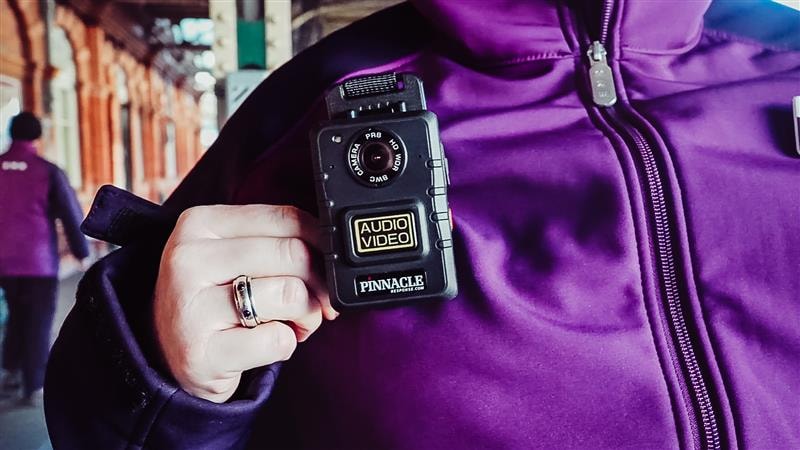
Think Twice: No Excuse for Abuse – EMR double the number of body-worn cameras to protect staff and customers
- EMR has doubled the amount of body-worn cameras for its staff
- Body-worn video helps safeguard colleagues and passengers by acting as a deterrent and capturing robust evidence
- The cameras are just one part of EMR’s THINK campaign, which aims to reduce abuse towards staff and customers.
- EMR is working closely with the British Transport Police and trade union representatives to deliver the project collaboratively.
East Midlands Railway (EMR), which is operated by Transport UK, has rolled out more than 330 additional body-worn cameras for its staff as part of its ongoing commitment to colleague and customer safety.
All station and on-train colleagues will carry cameras, which act as a safeguarding tool and deterrent while ensuring they capture robust evidence of any incidents, helping to protect both staff and passengers.
Staff will activate the cameras, for example during ticket checks, at busy stations, during events, or if a situation is escalating.
Any footage captured is automatically stored securely for 31 days. If required for an investigation, footage can be retained for longer and shared with the British Transport Police (BTP).
A study by the Rail Delivery Group (RDG) and the University of Cambridge shows that wearing body-worn cameras reduces the likelihood of assault by 47%, even when not recording.
Since April 2025, the BTP has recorded 60 crimes related to physical assaults and 136 related to verbal assaults against EMR staff, out of 21.8 million customer journeys.
EMR is working closely with the BTP and trade union representatives to ensure the rollout supports both staff and customer safety, reinforcing the message that there is no excuse for abuse on the railway.
Philippa Cresswell, Customer Experience Director, said: “Every day, thousands of people travel with us, and the vast majority do so safely and respectfully.
“Increasing the number of body-worn cameras is just one more way we are making our railway a safer place for everyone. Other measures include more specialist training, increased staff presence in key locations, new technology, and closer working with stakeholders.”